Rental Arbitrage Freedom
Open course resource →Guest-Function Room Specification
Define functional standards and quantities for every room.

MODULE 36
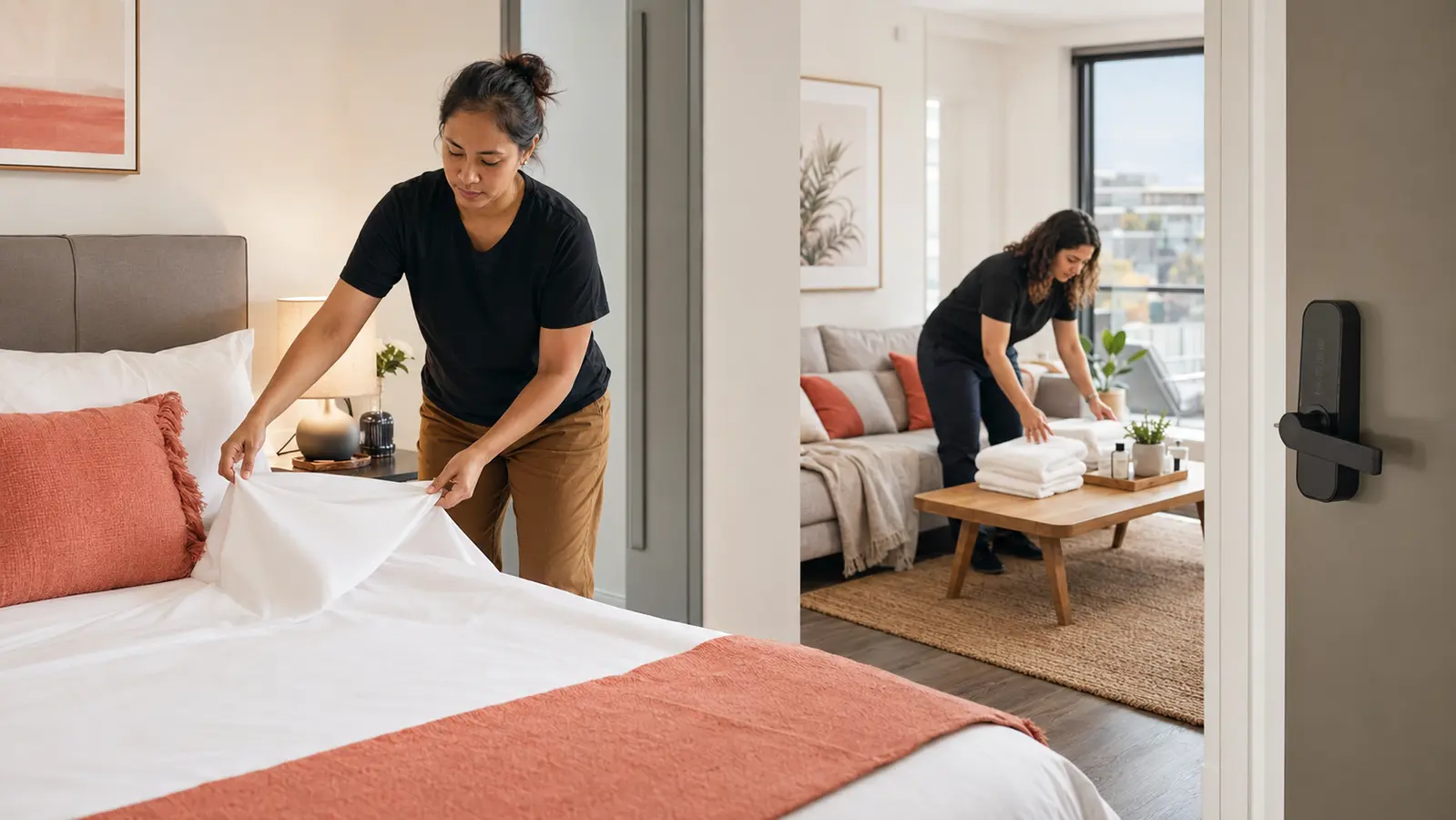
Commercial accommodation furniture must survive repeated use, clean efficiently, photograph well and remain replaceable. Comfort and function should be prioritised over fragile décor and personal taste.
Furnish for the chosen guest and stay pattern.
Balance durability, comfort, safety and replacement cost.
Create a complete room and asset specification.
Start with sleep, work, eat, wash, store, relax and access needs. A relocating family, project worker and weekend couple require different storage, beds, desks, kitchen depth and laundry capacity.
Use a room specification listing quantity, dimensions, standard, supplier, lead time and evidence. Styling should support function rather than reduce it.
Choose commercial-use suitability where relevant, washable materials, replaceable components and furniture appropriate to the property. Check stability, sharp edges, cords, load ratings, balcony use and child risks with qualified advice where needed.
Create spares for high-failure items and avoid unique products that cannot be replaced consistently across a portfolio.
Guests notice missing basics more than decorative abundance. Test cookware, lighting, power, seating, luggage space, climate, privacy and linen ratios as a complete system.
Photograph and record final placement so cleaners and maintenance suppliers can reset the property consistently.
A unit has decorative cushions and art but only two dining chairs for four guests, no bedside power and insufficient cookware. The operator reallocates the budget to functionality before adding decoration.
Define functional standards and quantities for every room.
Record supplier, cost, ownership, warranty, condition and replacement standard.
The target guest's actual stay tasks, property constraints and operating standard.
To reduce downtime, cost and inconsistency.
A complete guest journey and room-by-room functionality check.
Mattress, linen and sleep quality
Durable living and dining furniture
Workspaces, power and internet use
Kitchen and laundry completeness
Storage for guests, cleaners and linen
Styling consistency and replacement availability
Translate guest-avatar needs into room requirements
Create standard room inventories
Select durable, replaceable products
Test layout, circulation and cleaning access
Photograph and record all assets at setup
Room inventory
Product list and supplier links
Asset register
Warranty file
Styling guide
Buying based only on appearance
Using too many decorative objects
Under-supplying cookware or power access
Choosing white or fragile upholstery in high-use areas
Failing to protect mattresses and furniture